

- Peroxide free
- Zero sensitivity
- Up to 6 shades whiter in 14 days
- Enamel safe
- Dentist approved
- Free UK delivery
- 14-Day Two-Shade Guarantee
Teeth Whitening Strips For Sensitive Teeth
If whitening has hurt you before, peroxide was almost certainly the reason. Pure Glow strips don't contain any. They whiten with PAP, with hydroxyapatite and xylitol in the formula, and zero sensitivity is the reason the brand exists.


- Two-Shade Guarantee See terms
- Free UK Delivery No minimum spend
- Same Day Dispatch Order by 4.30pm, Mon to Fri
Delivery Options & Times
Delivery Options & Times
Free UK delivery
Free on every order, no minimum spend. Tracked, and usually arrives in 2-3 working days.
Express delivery (£1.99)
Tracked, and usually arrives the next working day. Choose it at checkout.
Same day dispatch
Order by 4.30pm, Monday to Friday, and your order goes out the same day. Orders placed after 4.30pm or at the weekend go out the next working day.
Why whitening strips hurt
Peroxide strips whiten with hydrogen or carbamide peroxide. Peroxide works its way through the enamel into the layer underneath, and that is what sets off the nerve. For some people the twinges last for days.
Home kits sold in the UK are also capped at 0.1% hydrogen peroxide. So a shop bought peroxide strip can still sting a sensitive tooth while being too weak to shift much colour. Stronger peroxide, up to 6%, is legal here, but only through a dentist, with the first treatment done at the practice. We go through the rules in is teeth whitening legal in the UK.

What PAP does differently
PAP (phthalimidoperoxycaproic acid) lifts stains without the peroxide reaction that provokes the nerve. That is where the zero sensitivity comes from.
Hydroxyapatite, the mineral enamel is mostly made of, helps to replenish the enamel surface while you whiten, which is the idea behind our hydroxyapatite whitening strips. Xylitol helps reduce the bacteria that cause plaque build-up, bad breath and cavities.

Why strip grip matters for sensitive teeth
In a sensitive mouth, how well a strip stays put matters as much as what is in it. When a strip slides, it drags gel onto your gums, which is where stinging can start, and it leaves the whitening patchy because the formula is no longer sitting evenly on the teeth. Wet-fit, gel-coated strips are the ones that tend to slide.
Strips that would not stay put are where Pure Glow started. On holiday in Ibiza, our founder Daniel Smith got through three sets of strips and not one of them stayed on, so roughly £5 of whitening went straight in the bin by the pool. Ten months of testing and four rejected formulas later, he had a strip that stays in place, comes off cleanly and whitens evenly.
Sore gums are usually a fit problem rather than a formula problem. Our strips are dry-fit with a no-slip grip, so they stay where you put them, keep the formula on your teeth rather than your gums and peel off clean, with no messy residue left behind. More on that in why whitening strips hurt your gums.
What to look for in whitening strips for sensitive teeth
There is no single best whitening strip for every sensitive mouth, but the things that make the real difference are consistent. If sensitivity is your main worry, check these, roughly in order of how much they matter.
- The whitening agent. Peroxide and peroxide-free strips behave very differently in a sensitive mouth. Check what a strip whitens with, not just what it leaves out.
- Whether it stays put. A strip that slides spreads gel onto your gums, which is where stinging can start, and it leaves the whitening patchy.
- Dry-fit or wet gel. Wet gel strips tend to migrate. Dry-fit strips grip the tooth and stay where you put them.
- Something for the enamel. Hydroxyapatite is the obvious one, because it is the mineral enamel is mostly made of.
- A clear wear time. Look for a clear minimum on the pack. Ours is a minimum of 30 minutes a day, and longer is fine.
- How it comes off. Strips that tear or leave residue mean more scrubbing afterwards, which is its own irritation.
- A full ingredients list. If a brand won't tell you its active ingredient, that tells you something.
Shade promises and LED lights bundled into the box are not on the list, because neither tells you how a strip will feel on a sensitive tooth. Judge any strip against this list, ours included.
If your teeth are already sensitive
- Brush, rinse, then dry your teeth. A towel works better than a tissue. Give it a few minutes, then apply the strips.
- Keep the strip just below the gumline. Some of what feels like whitening sensitivity is gel touching the gums.
- Don't double up to catch up. One treatment a day. Two in a day is more contact time, not faster results.
- Sensitivity toothpaste is fine alongside. Something like Sensodyne can be used through the course.
- Stop if something genuinely hurts. If irritation occurs, stop and let it settle, and see your dentist if it carries on.
Consistency beats strength
It is tempting to think a stronger strip gets you there faster. With sensitive teeth it tends to work the other way round: a strip that stings is a strip you stop using, and a course you give up on after two days whitens nothing.
What gets results is the steady part. One treatment a day, a minimum of 30 minutes, for the full 14 days, then 2 to 3 strips a week to keep your shade topped up. Gentle whitening you finish beats aggressive whitening you abandon. Once you are happy with your shade, keeping it there is a maintenance job rather than a whitening one, which we cover in how to maintain white teeth after whitening.
What to expect
Up to 6 shades whiter in 14 days, depending on the shade you start from. One strip on the top teeth and one on the bottom, for a minimum of 30 minutes a day. Clinically tested and dentist approved.

You're covered
Every order comes with our 14-Day Two-Shade Guarantee. Use the strips as directed for 14 days, and if you're not at least two shades whiter, you get a full refund. See the terms.
Let customers speak for us

Fantastic product, easy to use and I am already seeing results.
Ive used other whitening products before but have always been left with sensitivity, bad taste or strips that dont stick correctly so to say I was sceptical would be accurate however these are a game changer.
I can genuinely say none of the negatives experienced with other products have been repeated since using Pure Glow.
Im on day 6, and can see and feel a difference already. As long as you follow the advice then you cannot go wrong.
I will be buying more and continuing to use them to give me the smile Ive always wanted.
Genuinely surprised at how good they are, give them a try you wont be disappointed.
Wow oh wow these stripes are amazing been using now for nearly 2 weeks and the results are just fantastic.
Easy to use and very clean. No mess after removing and my teeth are starting to look amazing. It makes they feels nice and smooth and clean. Thank you and keep up the amazing work.
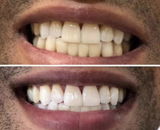
Best whitening strips i’ve used by far because they didn’t give me any sensitivity which was a massive concern for me. They stick really well to your teeth and didn’t leave that gel on my teeth. 100% recommend.
Amazing strips, no residue after use, even after using them for one week i can start really seeing a difference!!! Amazing value for money

As an avid at home teeth whitener I can hands down say these are the best I’ve ever used! Does exactly as stated. No gunk left on my teeth, insane shade lift after only 2 uses and literally do not budge once they’re on your teeth. I’ll never use another brand ever again.

Honestly I’ve tried and tested so many teeth whitening products that claim to be the best! But trust me when I say these whitening strips REALLY work! No sensitivity, no sticky residue, just 💯 guaranteed whiter teeth in 30mins!!!

I have struggled with my teeth for years and looked at different options and never found a product that seemed to do the job. I found PureGlow and decided to give it a go and I am so glad I did! They are so simple to use, don’t leave sticky residue like other products and I have seen such a noticeable difference in the shade of my teeth. Definitely recommend and will continue to use to increase the confidence in my smile. Thank you PureGlow!

After trying the 28 strip pack I was amazed how quickly noticeable results presented themselves. The strips are easily applied and removed without hassle and there is no aftertaste. I will be ordering more strips shortly to continue getting even more whiter teeth.
Common questions
Will these strips make my teeth sensitive?
No. Zero sensitivity is the claim we make, and it comes from the formula. There is no peroxide in it, and peroxide is what sets off the nerve.
Can I use whitening strips if I have sensitive teeth?
Yes. People with sensitive teeth are exactly who they were made for. If you have an untreated dental problem such as decay, a cracked tooth or gum disease, see your dentist before whitening with anything.
Which whitening strips are best for sensitive teeth?
Look for a peroxide-free whitening agent, a dry-fit strip that stays put, an enamel-supporting ingredient such as hydroxyapatite, a clear wear time and a full ingredients list. Judge any strip against that list, ours included.
Are they safe for enamel?
Yes. They're enamel safe, and the hydroxyapatite in the formula helps replenish the surface enamel while you whiten. There's more in are teeth whitening strips safe.
My gums get sore with other strips. Will these be different?
Sore gums usually come from strips that slide and push gel onto the gums, or from strips sitting too high against the gumline. Ours are dry-fit, so they stay where you put them and peel off clean. Sitting each strip just below the gumline, on dry teeth, helps keep the gel off them.
How white will my teeth get?
Up to 6 shades whiter in 14 days, depending on the shade you start from. Use one strip on the top teeth and one on the bottom for a minimum of 30 minutes a day.
How long before I see a difference?
It is different for everyone, because staining is. Some people notice a difference straight away, others after two or three uses, with the full result building over the 14 days.
Will they whiten crowns, veneers or bonding?
No. Whitening works on natural enamel. PAP can lift surface stains on dental work so it blends in better, but it won't change its base shade. More in can you whiten bonding, crowns or veneers.
Is there a guarantee?
You're covered by our 14-Day Two-Shade Guarantee. Use the strips as directed for 14 days, and if you're not at least two shades whiter, you get a full refund. See the terms.